
View this webinar on-demand by logging into the Member Center. If you are not a member, we encourage you to join.
The January 9, 2018 Montecito Debris Flows | A Community's Attempt to Mitigate Debris Flow Hazards
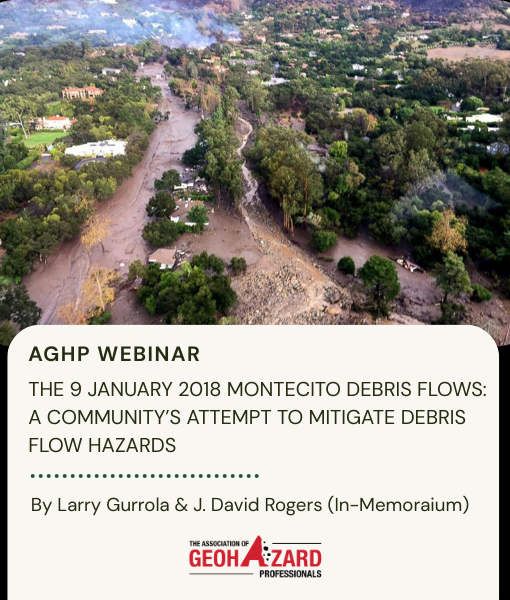
On January 9, 2018, catastrophic debris flows devastated Montecito, California—claiming 23 lives, destroying and damaging over 500 homes, and causing nearly $1 billion in losses.
But what has changed since?
In this powerful and timely webinar, Larry Gurrola presents an in-depth look at the 1-9 event, the geology behind it, and the community’s ongoing efforts to mitigate future debris flow hazards—alongside the late Dr. J. David Rogers (in memoriam).
You'll learn
- Why Montecito remains highly vulnerable to future debris flows
- What historic records reveal about recurrence intervals (hint: not 3,000–5,000 years)
- The role of post-fire conditions in triggering catastrophic events
- How mitigation efforts—including debris nets and basins—performed
- Critical questions that remain unanswered
With over 40 documented debris flow events since 1825—and major events recurring roughly every 48 years—the risk is not hypothetical.
Meet the Presenter
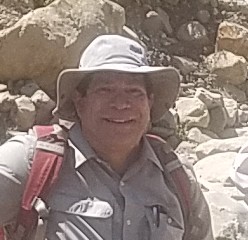
Larry D. Gurrola, Ph.D., PG, CEG
Dr. Larry Gurrola was the project manager and geomorphologist for The Project for Resilient Communities’ and the Partnership for Community Renewal’s studies in Montecito from 2020 through 2023. He led a team of civil and geotechnical engineers, and hydrologists to identify sites for the development of debris retention basins as part of a long-term Community Master Plan for reduction of flood and debris flow hazards. His graduate education at San Diego State University and UC Santa Barbara focused on tectonic geomorphology, Quaternary chronology, and paleoseismology. Dr. Gurrola mapped the geologic hazards, determined fault activities, and established alluvial fan ages on the Santa Barbara piedmont for his dissertation work at UC Santa Barbara. Registered as an engineering geologist, he provides independent consulting services for fault and landslides investigations, and performs geoforensic studies in Santa Barbara, Ventura, and Los Angeles Counties.